
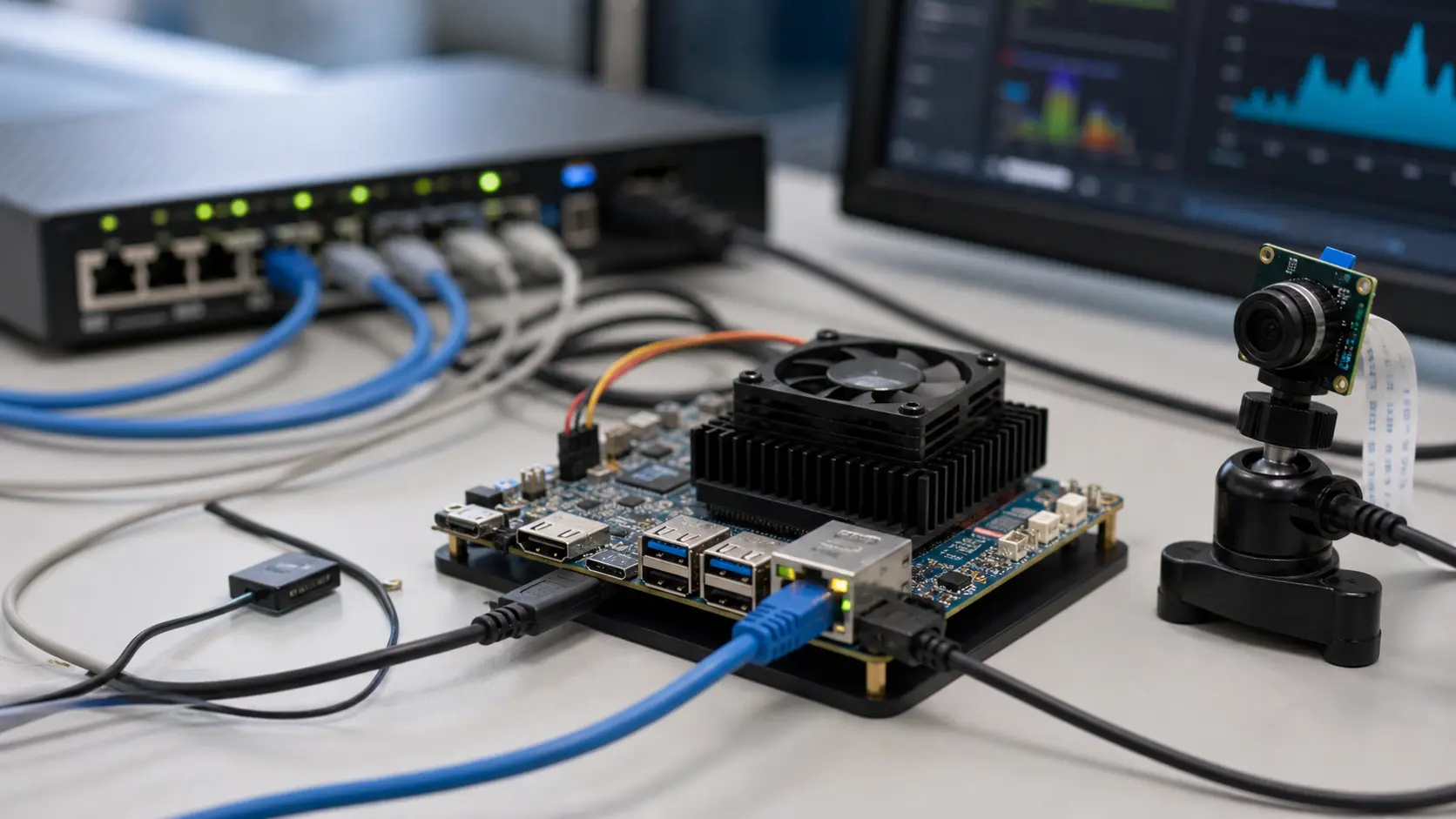
Edge computing has emerged as a transformative technology for industries seeking faster data processing, improved security, and reduced reliance on centralized cloud infrastructure. At the heart of many edge solutions lies the ARM-based Single Board Computer (SBC)—a compact yet powerful computing platform that combines energy efficiency, scalability, and flexibility.
This article explores the future of edge computing, the role of ARM-based SBCs, and why they are increasingly favored over traditional x86 platforms in modern deployments.
1. Understanding Edge Computing
Edge computing refers to processing data closer to the source—whether that’s an IoT sensor, an industrial machine, or a smart appliance—rather than transmitting it to a remote data center.
Benefits include:
- Reduced latency: Real-time decisions without waiting for cloud round-trips.
- Lower bandwidth costs: Less raw data sent to the cloud.
- Improved privacy: Sensitive data stays on-site.
- Resilience: Operations continue even if the network connection is interrupted.
In scenarios like autonomous vehicles, remote patient monitoring, and smart manufacturing, milliseconds matter. That’s where ARM-based SBCs excel.
2. Why ARM-Based SBCs Are Ideal for Edge
While x86-based systems dominate traditional computing, ARM platforms have surged ahead in the edge domain due to several advantages:
- Low power consumption – Ideal for battery-powered or solar-powered deployments.
- High performance-per-watt – Efficient multi-core architectures handle demanding workloads without excessive heat.
- Compact form factors – Easily embedded into devices and enclosures.
- Strong GPU capabilities – Useful for AI inference, computer vision, and multimedia processing.
When paired with an Android operating system, ARM SBCs offer a touch-friendly, app-rich environment—as discussed in Android SBC vs Linux SBC. For industrial control or real-time tasks, Linux-based ARM SBCs provide deterministic performance and extensive driver support.
3. Edge Computing Use Cases Powered by ARM SBCs
a) Smart Cities
Traffic monitoring systems use ARM SBCs to process video feeds locally, enabling real-time congestion management and reducing cloud processing costs.
b) Industrial Automation
ARM-based SBCs control machinery, monitor equipment health, and process sensor data at the edge, minimizing downtime.
c) Smart Retail
In-store analytics systems run AI models locally to track customer behavior and optimize product placement without sending personal data to the cloud.
d) Healthcare Devices
Portable diagnostic tools use ARM SBCs for on-device processing, ensuring patient data security and reducing latency during consultations.
4. The Android Advantage in Edge Devices
For edge applications with a strong human-machine interface (HMI) component—like kiosks, vending machines, or interactive displays—Android SBCs stand out.
Advantages include:
- Rich app ecosystem via APKs and Google Play.
- Rapid UI development with familiar Android frameworks.
- Seamless multimedia integration for video, audio, and touch interaction.
Developers seeking to combine Android’s HMI strengths with industrial hardware reliability often turn to platforms similar to those discussed in ARM-Based Android SBCs.
5. AI and Machine Learning at the Edge
One of the biggest drivers for ARM SBC adoption in edge computing is the integration of AI and machine learning capabilities directly on the device.
With AI accelerators and GPUs, ARM SBCs can:
- Run object detection models for surveillance systems.
- Perform predictive maintenance in industrial setups.
- Enable natural language processing for voice assistants.
This local processing eliminates the need to send sensitive data to cloud servers, improving privacy and response times.
6. Challenges and How They’re Being Addressed
a) Software Optimization
Running AI workloads efficiently on ARM requires optimized libraries and frameworks like TensorFlow Lite or ONNX Runtime.
b) Long-Term Support (LTS)
Industrial deployments demand 5–10 years of hardware and software support, which is increasingly being offered by SBC manufacturers targeting edge markets.
c) Security
Edge devices are potential attack points. Hardware-level security features, regular firmware updates, and secure boot mechanisms are essential.
7. Future Trends in ARM-Based Edge Computing
Looking forward, several trends are shaping the next wave of ARM SBC development for edge computing:
- Heterogeneous Computing – Combining CPUs, GPUs, and NPUs on a single chip for workload-specific acceleration.
- 5G Integration – Directly embedding high-speed connectivity for ultra-low-latency applications.
- Energy Harvesting – Self-powered edge devices for remote or hard-to-access locations.
- Standardized AI APIs – Making AI deployment faster and hardware-agnostic.
8. Conclusion
Edge computing is redefining how data is processed, analyzed, and acted upon—and ARM-based SBCs are at the center of this transformation.
Their energy efficiency, flexibility, and integration capabilities make them ideal for diverse edge applications, from industrial automation to healthcare, retail, and beyond.
By leveraging both Android and Linux environments, developers can build edge systems that balance performance, user experience, and long-term stability.
As AI integration deepens and connectivity standards evolve, ARM-based SBCs will remain a cornerstone technology in the rapidly expanding edge computing landscape.
Production Notes and Review Checklist
A useful way to review the future of edge computing: role of arm-based sbcs is to separate the attractive feature from the production responsibility that comes with it. A board, interface, display, or operating system choice may look simple during a demo, but the final product has to survive repeated boots, power loss, peripheral changes, enclosure heat, and software updates. Those conditions should be part of the article’s practical takeaway, not an afterthought.
For engineering teams, the review should include three records. The first is the hardware record: connector mapping, voltage levels, display timing, power budget, and any thermal measurements taken inside the intended enclosure. The second is the software record: Android build version, kernel changes, device tree changes, permissions, update method, and recovery path. The third is the supplier record: lifecycle expectations, lead time, change notice process, and who is responsible when a driver or firmware issue appears.
This matters because embedded Android products often fail in small, ordinary ways. A USB scanner may enumerate slowly after a cold boot. A serial adapter may work on a short cable but fail near a motor drive. A display may look correct on the bench but wake inconsistently after sleep. A firmware update may be safe in the office but risky when a field unit loses power. None of these issues make the platform unsuitable; they simply need to be tested before the design is frozen.
Before production, run a short validation pass with the real display, real power source, real enclosure, and all expected peripherals connected at the same time. Leave the device running long enough to expose heat and memory behavior. Reboot it from cold power. Disconnect the network. Fill part of the storage. Confirm that logs are available when something fails. This kind of checking is not glamorous, but it is the difference between a promising prototype and a product that support teams can stand behind.